

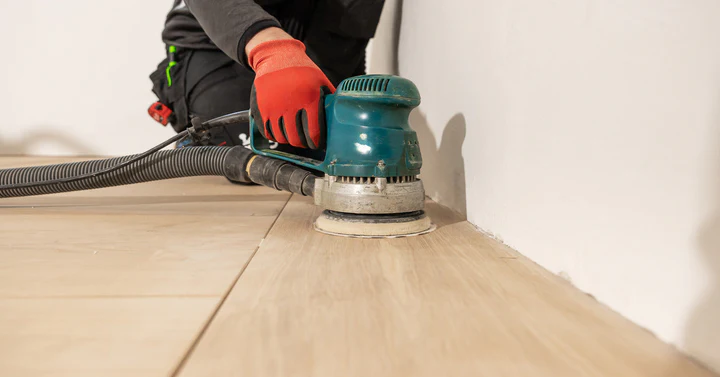
Your hardwood flooring is designed to last for a century or more. However, without proper maintenance at the right time, they may need a replacement within just 30 years. So, how do you know when your floors will need professional sanding? Some of the common signs include loss of even finish, appearance of scratches, and a feeling of rough texture underfoot.
The good thing about hardwood floors is that they do not fail all at once. The warning signs appear at a gradual pace. So, knowing how to tell the signs can help you take the right steps to extend your floor’s lifespan. Here are 6 signs that tell you that your hardwood floor needs professional sanding.
1. Scratches & Gouges
Hardwood floors experience a lot of wear and tear that can leave its mark. If you notice rough patches, white lines, or deeper gouges, they may be signs your floor needs repair. While light scratches can, at times, be buffed out with a polish, any further damage will need sanding.
It is recommended to look for the following signs:
- Dull walkways around the kitchen and hallways
- Cloudy areas that cannot be improved with cleaning
- Thin finish under tables and around thresholds
2. Grey or Dry Floor in Traffic Lanes
If your floor is greying in the following areas, you should get a professional assessment for sanding:
- Hallway centers
- Around the beds
- Entrance paths
- Around kitchen islands
- Around the couch
These are signs that the finish has worn away and the dirt can interact directly with the timber. Look out for timber that looks dirty and never clean, a pathway between rooms that seems older than the surrounding floor, and boards close to doors that seem dry.
3. Appearance of Splinters
No one should feel the sharp sting that splinters can cause in the heel. Wooden floors can develop splinters or lift slightly to create rough spots due to the effects of temperature and humidity changes. These variations can cause the floors to expand and contract.
Sanding not only removes splinters but also creates a comfortable and even surface. You will no longer have to worry about splinters when someone walks barefoot.
4. Bare Wood Appears in Threshold Areas
A lot of the wear and tear takes place around the doorway. This is due to the high frequency of footfall, repetitive turning movement, and grit. If you notice bare wood in this area, the floor is vulnerable to stain, moisture intrusion, and surface damage.
Common areas where you may notice the appearance of bare wood include:
- Kitchen entrance
- Thresholds between the hallway and the lounge
- Door arcs
- Stair landing areas
5. Stains & Water Damage
Dark spots and patches on your floor can be water stains. Moisture can not only affect your floor’s aesthetics, but it can also depreciate its strength. Warping or deep stains require professional sanding to restore your floor’s condition. Professionals will know the amount of wood to be removed while retaining the floor’s strength.
6. Significant High & Low Spots
Sometimes, the floorboards can shift due to poor installation. This can also happen due to subfloor settling. If you experience sudden bumps or dips or hear hollow sounds when walking, it can mean the boards are not properly bedded with the subfloor. With professional sanding, you can have such high and low spots leveled to create a smooth and even surface.
There are many scenarios where your hardwood flooring will need sanding to restore its functionality and appearance. This includes the deterioration of the shine while the colors are still there, gaps that open and close seasonally, cupping visible in raking light, and UV fading under the rug. Many times, the floor is due for professional maintenance when homeowners don’t remember the last time it was serviced. If your hardwood floor has not been sanded for over 5 years, you may want to have it inspected by professionals.