

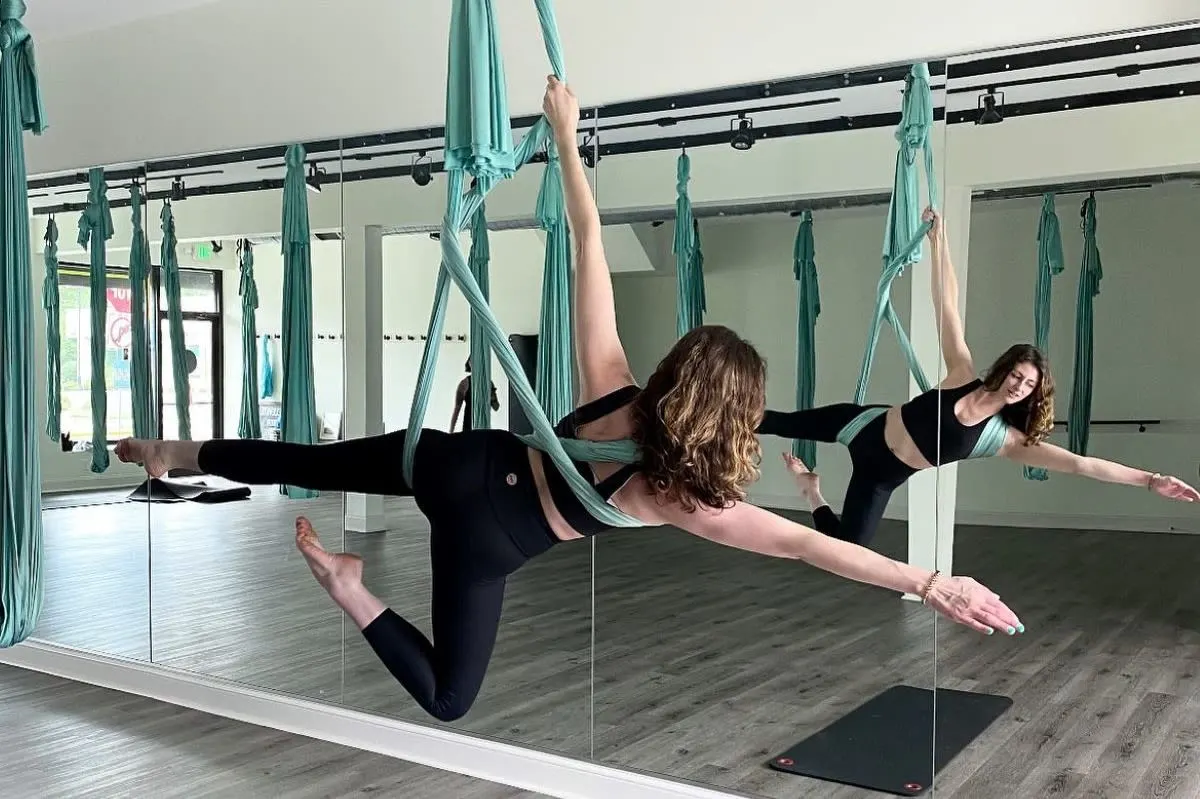
The appeal of practising aerial yoga at home is understandable. The freedom to practise at any hour, without booking a class, in the comfort of your own space, is genuinely attractive for practitioners who have developed a solid studio foundation and want to extend their practice beyond scheduled sessions. However, in Singapore’s residential context, the question of whether a home aerial yoga setup is feasible is more layered than it might initially appear. It involves structural engineering, building regulations, lease agreements, safety hardware, and an honest assessment of skill level. For practitioners drawn to Aerial yoga and curious about home practice, this guide provides a thorough, realistic examination of every factor that matters.
Understanding the Load Requirements
Before any other consideration, the structural load requirement of an aerial yoga hammock must be understood. A properly rigged aerial yoga point must be capable of supporting what engineers call a dynamic load, which is a force that includes not just static body weight but the additional forces generated by movement, swinging, and sudden changes in direction.
Industry safety standards for aerial arts rigging specify a minimum load rating of several times the practitioner’s body weight for the rigging point, typically a factor of safety between six and ten times the maximum dynamic load. For a practitioner weighing seventy kilograms, the rigging point should theoretically be rated to support several hundred kilograms under dynamic loading conditions.
This is not a standard that most residential ceilings in Singapore are designed to meet by default. Standard residential reinforced concrete slabs in Singapore HDB flats and most condominiums are designed to carry distributed loads across the floor, not concentrated dynamic point loads hanging from a single anchor. The structural implications of attaching a dynamic load point to a residential ceiling are significant and should never be assumed to be acceptable without professional assessment.
HDB Flats: The Regulatory Reality
HDB flats in Singapore are subject to the regulations set out by the Housing and Development Board, which governs all modifications to the flat’s structure. Under HDB’s guidelines, any work that involves drilling into or modifying structural elements, including load-bearing ceilings, beams, walls, and columns, requires HDB’s prior approval and must be carried out by a HDB registered contractor.
Attaching an aerial yoga rigging point to a structural element of an HDB flat almost certainly falls within the category of works requiring prior approval. Doing so without approval violates the terms of the HDB lease agreement and may result in the requirement to reinstate the flat to its original condition at the owner’s expense.
Furthermore, HDB’s structural guidelines do not guarantee that any given HDB ceiling can support the dynamic load requirements of aerial yoga rigging. The only way to determine whether a specific location in a specific flat can safely support such a load is through a structural assessment by a registered Professional Engineer, which is a formal engineering credential in Singapore regulated under the Professional Engineers Act.
The practical conclusion for HDB residents is that setting up a permanent, load-bearing aerial yoga rig is exceptionally challenging and unlikely to receive approval in most cases. Temporary or freestanding frame options, discussed below, represent a more realistic avenue.
Condominiums: More Flexibility, Still Significant Constraints
Private condominiums in Singapore offer somewhat more flexibility than HDB flats in terms of renovation and modification rights, but aerial yoga rigging still presents substantial challenges. Individual condominium units are subject to the building management’s bylaws, which in most cases prohibit modifications to structural elements including ceilings and beams without management corporation consent.
Structural columns and beams in Singapore condominiums, which are the elements most likely to be capable of supporting aerial yoga loads, are typically exposed in certain unit configurations. A load-bearing beam in a high-ceiling unit, such as those found in some older or loft-style developments, may in theory be capable of supporting a rigging point if professionally assessed and properly installed. However, this remains subject to management corporation approval and a structural engineer’s confirmation.
Practically speaking, condominium residents interested in home aerial yoga rigging should follow these steps:
- Review the building’s strata title bylaws for modification restrictions
- Consult with the management corporation before proceeding
- Commission a structural assessment from a registered Professional Engineer
- Ensure any installation is carried out by a qualified rigging professional
- Obtain written confirmation of all approvals before installation
Ceiling Height: The Non-Negotiable Minimum
Regardless of structural considerations, ceiling height is a firm practical constraint. Standard aerial yoga practice requires a clear height of at least three to three and a half metres from floor to rigging point to allow for safe movement, particularly during standing poses in the hammock and any gentle inversion work. Most HDB flats and a large proportion of Singapore condominiums have standard ceiling heights of approximately two point five to two point seven metres, which falls below the minimum practical requirement.
Some landed properties in Singapore, including terrace houses, semi-detached homes, and bungalows, may have higher interior ceiling heights, particularly in living areas or purpose-built recreation spaces. These properties generally also offer greater structural flexibility for modifications and may represent the most realistic residential context for home aerial yoga setups in Singapore.
Freestanding Aerial Yoga Frames
For practitioners who cannot meet the structural or regulatory requirements for ceiling-mounted rigging, freestanding aerial yoga frames offer an alternative. These are purpose-built steel or aluminium frame structures that create their own load-bearing support without requiring attachment to the building’s structure.
Freestanding frames suitable for aerial yoga are commercially available and are used in home settings internationally. Key considerations for Singapore residents include:
- The frame must be rated specifically for aerial yoga or aerial arts loads, not just hammock lounging
- The footprint of the frame must fit within the available space, accounting for the clearance required around the practitioner during movement
- The floor surface beneath the frame should be non-slip and ideally padded
- The frame must be assembled according to manufacturer specifications and inspected regularly for joint integrity and hardware wear
- Even freestanding frames should be used on level flooring with adequate load distribution under the feet
Space requirements for a freestanding aerial yoga frame are significant. The frame itself typically spans approximately two to three metres in width and two metres in depth, and the practitioner needs at least one metre of clear space on all sides during use. In a typical Singapore HDB or condo bedroom, this may not be feasible. A larger living area or a dedicated room is generally required.
Safety Hardware and Equipment Standards
Whether using a ceiling mount or a freestanding frame, the quality of the hardware is critical to safety. The load-bearing components of an aerial yoga setup include the rigging point or frame, the carabiner or swivel connecting the hammock to the rigging, and the hammock fabric itself.
All hardware should be rated for dynamic loads in aerial arts applications. Standard decorative or utility carabiners, bolts, and hooks are not appropriate. Aerial arts suppliers and professional rigging companies supply hardware specifically rated for dynamic human loads, typically with documented load ratings and safety factors. The hammock fabric should be made from a fabric grade specifically designed for aerial arts, with documented stretch characteristics and tensile strength. Dance silks, nylon tricot fabrics, and low-stretch materials each have different performance characteristics and are appropriate for different aspects of aerial practice.
Inspecting all hardware and fabric regularly for wear, fraying, corrosion, and deformation is non-negotiable. Aerial yoga hammocks and hardware should be replaced at recommended intervals and immediately upon any sign of degradation.
Why Studio Practice Remains the Foundation
For the vast majority of Singapore residents, the structural, regulatory, space, and equipment constraints mean that home aerial yoga practice is not a realistic primary training option. More importantly, practising aerial yoga at home without the oversight of a qualified instructor removes a critical layer of safety. The guidance of an experienced instructor is not just about learning sequences. It is about identifying alignment errors, monitoring fatigue-related risk, adjusting poses for individual anatomy, and ensuring that the practitioner does not push beyond their current capability in ways that create injury risk.
Home practice, when it does become appropriate for experienced practitioners, should supplement studio training rather than replace it. A practitioner who has developed strong foundations, understands their body’s responses in the hammock, and can accurately assess their own alignment and fatigue is in a far better position to practise safely at home than someone relying solely on online tutorials.
Practitioners at Yoga Edition who are interested in developing the level of skill and body awareness that would support eventual home practice are encouraged to discuss their goals with their instructors, who can guide their progression with that aim in mind.
Frequently Asked Questions
Q: Are there any Singapore authorities I can contact to check whether my home modifications for aerial yoga are allowed? A: For HDB flats, the Housing and Development Board’s e-Service portal allows residents to submit renovation enquiries. For condominiums, the management corporation or management office is the first point of contact. The Building and Construction Authority (BCA) oversees structural matters for private properties. A registered Professional Engineer can be engaged through the Singapore Institute of Structural Engineers’ member directory.
Q: What is the approximate cost of commissioning a structural assessment for aerial yoga rigging in Singapore? A: Structural engineering assessment fees in Singapore vary significantly based on scope and the engineer’s professional fee schedule, but a site-specific assessment for a single rigging point typically ranges from a few hundred to over a thousand Singapore dollars, depending on the complexity of the assessment and whether detailed drawings are required.
Q: Can I use a doorway pull-up bar frame or a simple ceiling hook for aerial yoga at home? A: No. Doorway bars and decorative ceiling hooks are not engineered for the dynamic loads generated by aerial yoga. Using them for aerial practice creates a serious risk of sudden structural failure during movement, which can cause severe injury. Only purpose-built aerial arts hardware with documented dynamic load ratings should be used.
Q: Are there any landed property types in Singapore that are more suitable for home aerial yoga setups? A: Double-storey terrace houses, semi-detached homes, and bungalows with exposed structural beams or high-ceiling recreation rooms offer the most realistic potential for home aerial yoga setups. These properties still require structural assessment and appropriate approvals, but the physical characteristics of ceiling height and structural element accessibility are more favourable than in most flat-type residences.
Q: Is there a way to practise aerial yoga at home safely without permanent rigging? A: Yes, a quality freestanding aerial yoga frame placed in a sufficiently large room is the most accessible option for home practice in Singapore’s residential context. Ensure the frame is specifically rated for aerial arts use, has adequate clearance on all sides, and is placed on a stable, level surface. Regular inspection and adherence to the manufacturer’s load and assembly specifications are essential.