

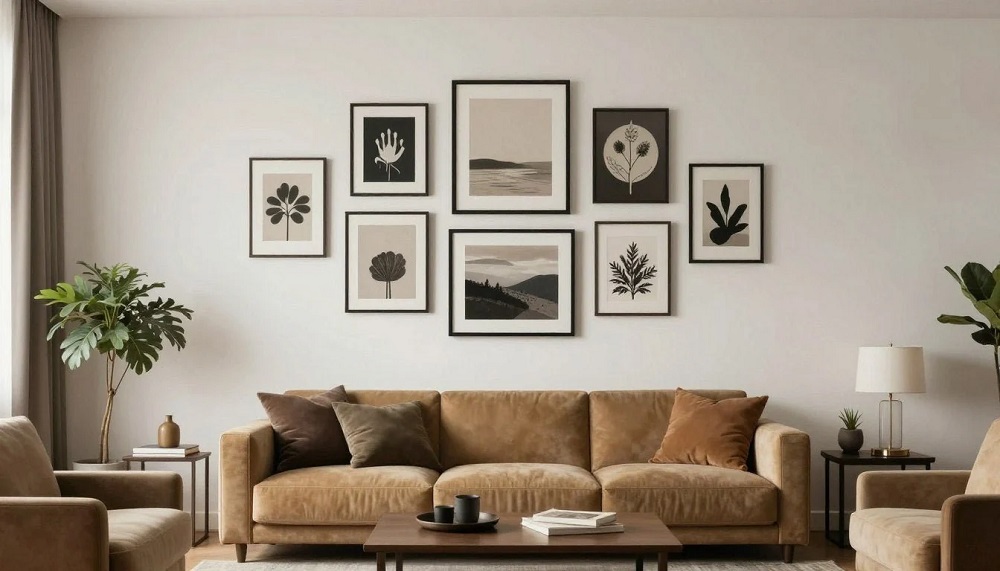
A blank wall represents an unwritten story in interior design. Empty vertical surfaces can make a home feel incomplete, cold, and echoing, regardless of how thoughtfully curated the furniture and floor decor may be. Transforming these vacant expanses into compelling visual focal points breathes character, warmth, and artistic intention into a living space.
Decorating walls goes far beyond hanging a single framed print in the center of a room. It involves understanding scale, texture, light reflection, color harmony, and spatial balance. Whether you are decorating an expansive living room accent wall, a narrow hallway, or a cozy bedroom nook, utilizing diverse visual mediums creates a layered, dynamic environment. This guide explores innovative wall decor strategies to elevate your home aesthetic while expressing personal style.
Building Dynamic Gallery Walls with Personal Impact
A gallery wall is one of the most versatile methods for personalizing a residential space. Rather than relying on a single large artwork, a gallery layout combines multiple visual elements to form a rich narrative.
Curation and Theme Selection
The key to an impactful gallery wall is intentional curation. Mixing various art forms adds depth and prevents the display from looking like a generic commercial catalog.
- Diverse Visual Mediums: Combine original paintings, black-and-white family portraiture, architectural sketches, graphic line art, and vintage botanical prints.
- Dimensional Artifacts: Integrate three-dimensional items alongside flat frames, such as antique brass keys, small carved wooden masks, convex mirrors, or shallow woven baskets.
- Color Palette Cohesion: Establish visual harmony by choosing a repeating color family across the artwork or utilizing uniform framing materials like natural oak, brushed brass, or matte black wood.
Layout Planning and Spacing Precision
A common pitfall when assembling a gallery display is improper layout execution. Before hammering nails into the drywall, lay all pieces flat on the floor in front of the target wall. Experiment with different arrangements until you achieve structural equilibrium. Maintain a consistent spacing distance between two and three inches between frames to keep the arrangement structured rather than cluttered. Anchor the central focus of the entire arrangement at approximate eye level, roughly fifty-seven to sixty inches from the floor.
Incorporating Oversized Statement Art and Murals
For homeowners who prefer clean minimalism over detailed art arrangements, a single oversized art installation creates an immediate architectural statement.
The Impact of Large-Scale Canvas Prints
An oversized artwork acts as the visual anchor for an entire room. Placed above a living room sofa, a dining room sideboard, or a primary bed headboard, a massive canvas eliminates visual noise and establishes a sophisticated focal point. Choose abstract compositions with sweeping brushstrokes for modern spaces, or dramatic landscape photography for classic, grounding aesthetics. Ensure the artwork spans roughly two-thirds to three-quarters of the width of the furniture piece situated below it to maintain proper scale balance.
Architectural Hand-Painted Murals and Wallpaper
Murals transform plain vertical surfaces into immersive artistic landscapes. Modern removable wallpaper mural panels allow renters and homeowners alike to introduce botanical rainforests, abstract watercolor landscapes, or geometric mid-century patterns without permanent plaster modifications. For a custom, bespoke touch, hand-painting abstract geometric blocks or tonal organic shapes directly onto a wall adds architectural interest using affordable interior paint samples.
Adding Dimensionality with Texture and Sculptural Elements
Flat wall surfaces benefit immensely from tactile, light-catching textures. Introducing three-dimensional elements breaks up static drywall planes, casting dynamic shadows that shift as natural lighting changes throughout the day.
Woven Wall Hangings and Fiber Art
Macrame installations, hand-woven tapestry hangings, and chunky yarn art introduce physical warmth and soft acoustics to hard, modern rooms. Fiber art works exceptionally well in bedrooms and nursery spaces where cozy, inviting textures are prioritized. The organic movement of woven wool and cotton contrasts beautifully against smooth painted plaster and structured metal furniture frames.
Metal and Carved Wood Sculptures
Incorporating mid-century brass wire starbursts, forged iron branch silhouettes, or intricate geometric carved wooden panels elevates visual sophistication. Metal decor reflects both natural sunlight and warm interior ambient light, bringing subtle luminescence to dim dining rooms or entryways. Carved architectural wooden panels bring historical architectural richness to contemporary construction.
Functional Wall Decor: Mirrors, Shelving, and Floating Systems
Wall decor can merge high-end visual design with practical daily utility. Leveraging functional installations allows you to display cherished collection items while expanding the perceived physical dimensions of a room.
Strategic Mirror Placement for Light Reflection
Mirrors are transformative design tools. A strategically positioned large wall mirror bounces natural light deep into dark corridors, instantly making compact floor plans feel spacious and airy.
- Grid-Patterned Windowpane Mirrors: Offer industrial charm while simulating the architectural presence of an additional window.
- Arched Floor-to-Ceiling Wall Mirrors: Introduce soft curves that balance rigid horizontal lines in living room seating arrangements.
- Convex and Antiqued Glass Mirrors: Act as decorative focal objects, offering distorted light refractions and vintage elegance without overwhelming surrounding artwork.
Floating Shelves and Display Ledges
Floating wooden or metallic shelves provide versatile platforms for rotating seasonal artwork, framed photography, trailing house plants, and hardbound books. Picture ledges allow you to layer overlapping frames of varying heights without drilling dozens of permanent holes in the wall, making art updates effortless.
Integrating Living Greenery and Vertical Gardens
Bringing outdoor elements inside creates a calming biophilic connection that enhances indoor air quality and visual comfort. Vertical plant walls transform blank walls into vibrant, living art installations.
Wall-Mounted Planters and Propagation Stations
Utilizing ceramic pocket planters, brass geometric wall vases, or glass propagation tubes allows trailing vines like pothos, philodendrons, and English ivy to cascade down smooth wall surfaces. Mounting living plants near bright window walls creates organic green backdrops that evolve over time.
Preserved Moss Art Arrangements
For low-light interior spaces like windowless powder rooms or long hallways where living plants struggle to survive, preserved moss installations provide a maintenance-free solution. Framed preserved reindeer moss, sheet moss, and driftwoods offer rich green hues and spongy tactile textures without requiring watering, pruning, or specialized grow lighting.
Utilizing Structural Molding, Trim, and Accent Woodwork
Sometimes the wall surface itself can become the artwork. Applying dimensional carpentry trim adds historical architectural depth and sophisticated elegance to basic drywall construction.
- Board and Batten Paneling: Vertical wooden strips applied over drywall create classic geometric grids that elevate entryways and dining rooms.
- Picture Frame Molding (Wainscoting): Delicate decorative trim rectangles applied to upper or lower wall sections add traditional European elegance.
- Modern Slat Accent Walls: Vertical thin wood slats mounted over black-painted background walls deliver contemporary acoustic dampening and warm Scandinavian aesthetics.
Frequently Asked Questions
How high should artwork be hung on a blank wall?
A universal interior design standard is to position the center point of the artwork at eye level, which is typically fifty-seven to sixty inches from the floor. When hanging art above a piece of furniture like a sofa or console table, position the bottom edge of the frame four to eight inches above the top of the furniture piece to maintain visual cohesion.
How do I choose the right frame colors for a gallery wall?
Frame choices depend on the desired mood. For a clean, modern aesthetic, select identical frame finishes, such as all black, white, or light oak. For an eclectic, bohemian, or traditional gallery wall, mix different materials such as carved gold leaf, dark walnut, and natural brass, ensuring that the visual weights of the frames are distributed evenly throughout the arrangement.
What are the best non-damaging wall decor options for rental properties?
Renters can transform blank walls using heavy-duty adhesive picture hooks, removable peel-and-stick wallpaper murals, lightweight tapestry hangings, leaning large floor mirrors against walls, or utilizing tension-mounted floor-to-ceiling display poles that eliminate drilling into drywall altogether.
How can I make a small room look bigger using wall decor?
To expand the perceived size of a small room, hang a large oversized mirror opposite a window to reflect light and views. Additionally, mount floating shelves close to the ceiling to draw the eye upward, or choose a single large-scale piece of art rather than multiple small prints to keep the visual field uncluttered.
What type of wall decor works best in high-humidity areas like bathrooms?
High-humidity environments require water-resistant materials. Metal sculptures, sealed ceramic wall plates, glass-enclosed framed prints with moisture-resistant matting, architectural mirrors, and preserved moss art perform exceptionally well in bathrooms without warping or degrading from steam.
How do I balance a blank wall around a wall-mounted television?
To integrate a television smoothly, surround the screen with a curated gallery wall using dark or black frames to camouflage the black monitor frame when turned off. Alternatively, install floating display shelves above and beside the television, or frame the screen with vertical wood slat paneling to incorporate it into a intentional architectural feature.
How do I fill a large, two-story tall blank wall in an open-concept house?
Two-story blank walls require large-scale elements to prevent the room from feeling dwarfed. Effective solutions include building a full-height floor-to-ceiling wood slat or board-and-batten accent feature, hanging a series of three extra-large vertical canvas artworks in a horizontal row, or mounting a dramatic vertical fiber art installation that spans across upper and lower architectural levels.