

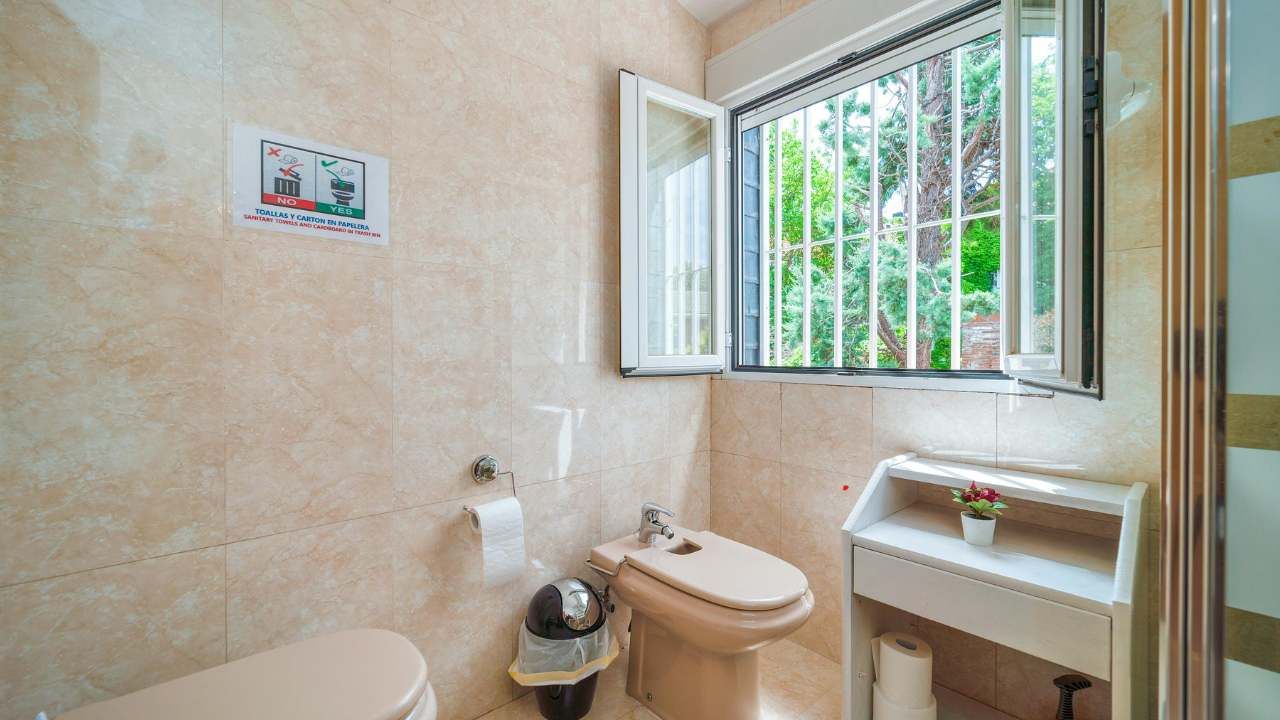
Bathrooms generate more concentrated moisture per square foot than any other space in a residence. A typical ten-minute hot shower releases nearly a pint of water vapor into the air, causing relative humidity levels to spike above eighty percent in a matter of minutes. When this warm, saturated air encounters cold surfaces like mirrors, tile, drywall, and ceilings, it condenses into liquid water droplets.
Without effective ventilation to extract this airborne moisture, stagnant water creates ideal conditions for microscopic mold spores to germinate. Fungal growth degrades building materials, ruins paint and grout, and releases airborne allergens that compromise indoor air quality. Preventing mold requires a dual approach: optimizing mechanical and natural airflow to exhaust humid air, and adopting targeted maintenance habits that eliminate standing water before mold can take root.
The Science of Humidity and Fungal Growth
Mold spores exist naturally in both outdoor and indoor environments, entering homes through doors, windows, and HVAC systems. These spores remain harmlessly dormant until they encounter three specific conditions: organic nutrients, favorable temperatures, and sustained moisture. Bathrooms provide an abundance of nutrients in the form of cellulose-based drywall, paper backing, wooden trim, and soap residue.
Relative humidity dictates whether mold can thrive. Fungal spores generally require a relative humidity level of sixty percent or higher to germinate on building surfaces. If the local surface moisture remains elevated for more than twenty-four to forty-eight hours, spores sprout microscopic threads called hyphae, which digest the underlying material and spread rapidly across surfaces.
Inadequate ventilation traps humid air in corner pockets, behind shower curtains, and along ceiling joists. Over time, this trapped moisture causes drywall to soften, paint to blister, and black fungal colonies to form in the porous matrix of tile grout and silicone sealants.
Sizing and Selecting the Right Exhaust Fan
The most critical defense against bathroom moisture is a properly sized mechanical exhaust fan. Many homes contain builder-grade ventilation units that lack the capacity to move air effectively out of the space.
Calculating Required Airflow in CFM
Ventilation capacity is measured in Cubic Feet per Minute, which indicates the volume of air the fan can extract every sixty seconds. The Home Ventilating Institute provides clear guidelines for sizing exhaust systems based on room footprint:
- Bathrooms Under 100 Square Feet: Allocate one CFM per square foot of floor area, with a minimum requirement of fifty CFM. A seven-by-nine-foot bathroom (sixty-three square feet) requires a fan rated for at least sixty-five to seventy CFM.
- Bathrooms Over 100 Square Feet: Calculate capacity based on the specific fixtures installed rather than square footage alone. Assign fifty CFM for every standard toilet, fifty CFM per standard shower, fifty CFM per bathtub, and one hundred CFM for a high-volume jetted tub.
Selecting a fan with higher CFM than the absolute minimum requirement ensures faster moisture evacuation and reduces the total runtime needed to restore baseline humidity.
Evaluating Noise Levels in Sones
Homeowners frequently turn off noisy bathroom fans prematurely, leaving excess moisture behind. Fan noise is measured in sones, where lower numbers correspond to quieter operation:
- 4.0 Sones or Higher: Standard builder-grade fans, comparable to the sound of a loud television or bustling kitchen.
- 1.5 to 2.0 Sones: Moderate noise level, similar to a quiet conversation or running refrigerator.
- 0.3 to 1.0 Sones: Ultra-quiet units that operate almost silently, encouraging occupants to leave them running for the necessary duration.
Investing in a fan rated at 1.0 sone or lower significantly improves compliance with proper ventilation habits among household members.
Ductwork Best Practices for Maximum Air Extraction
An exhaust fan is only as effective as the ductwork connected to it. Improperly routed or restrictive ducts create backpressure that drastically reduces actual airflow below the fan rated CFM.
Duct Material and Diameter
Smooth, rigid metal ducting or semi-rigid aluminum ducting is far superior to flexible, ribbed plastic foil ducts. The internal ridges of flexible ductwork create turbulence and static pressure resistance, reducing airflow efficiency by up to fifty percent. Select smooth 4-inch or 6-inch diameter metal piping depending on the fan manufacturer specifications, and keep duct runs as short and straight as possible.
Routing and Termination
Exhaust air must always be routed directly to the building exterior through a dedicated roof or sidewall cap equipped with a backdraft damper and insect screen. Never terminate a bathroom exhaust duct into an attic, soffit, or crawlspace. Dumping warm, humid air into an unconditioned attic space causes water vapor to condense on roof sheathing and wooden rafters, leading to hidden structural rot and massive attic mold outbreaks.
In cold climates, insulate the entire length of the exhaust duct passing through unconditioned spaces with minimum R-4 fiberglass sleeve insulation. Uninsulated ducts cause hot shower air to condense inside the pipe, causing water to pool and leak backward through the fan housing into the bathroom ceiling.
Optimizing Airflow Mechanics and Makeup Air
Mechanical fans operate on pressure differentials; they cannot push air out of a room unless replacement air can enter. This incoming replacement air is known as makeup air.
If a bathroom door fits tightly against the finished floor, the exhaust fan creates a negative pressure zone inside the sealed room. The fan motor strains against this vacuum, reducing its extraction capacity and pulling air from undesirable sources, such as drainage pipes or wall cavities.
To ensure proper air turnover:
- Maintain a clearance gap of at least three-quarters of an inch between the bottom of the bathroom door and the top of the flooring material.
- Keep the bathroom door slightly cracked when using the shower if privacy allows, or crack a nearby window in adjacent hallway spaces.
- Avoid running central air HVAC return vents directly inside small bathrooms, as this can disrupt the localized exhaust pressure balance.
Automated Controls and Smart Ventilation Upgrades
Relying on manual wall switches often leads to human error. Occupants either forget to turn the fan on before bathing or turn it off immediately upon leaving the room, leaving high humidity trapped inside. Modern control systems automate the ventilation process to guarantee complete air turnover.
Digital Countdown Timers
Replacing standard toggle switches with digital countdown timers allows users to press a button for twenty, forty, or sixty minutes of continuous operation post-shower. This ensures the fan runs long enough to dry out the enclosure fully after occupants leave the house or go to sleep.
Humidity-Sensing Humidistats
Smart humidistat switches monitor relative humidity and the rate of humidity increase in real time. These switches automatically activate the exhaust fan when a rapid rise in moisture is detected and continue running the unit until the room returns to an acceptable ambient baseline, typically below fifty-five percent relative humidity.
Continuous Low-Flow Ventilation
In tight, energy-efficient homes built to modern air-sealing standards, continuous multi-speed fans are highly effective. These units run continuously at an ultra-quiet, low CFM level (around twenty to thirty CFM) to provide background indoor air exchange, automatically ramping up to high speed (eighty to one hundred CFM) when someone enters or turns on the shower.
Passive Ventilation Habits and Surface Moisture Management
While mechanical fans clear airborne vapor, standing water on physical surfaces requires active physical management. Decreasing the surface area of liquid water drastically reduces evaporation time, leaving less moisture available to feed mold spores.
- Use a Glass and Tile Squeegee: Wiping down shower walls, glass doors, and tile surfaces with a rubber squeegee after every shower removes up to seventy-five percent of standing water, directing it down the drain rather than relying on room air to evaporate it.
- Spread Out Towels and Curtains: Folded or bunched bath towels trap moisture against fabric fibers, slowing drying and producing a sour odor. Hang bath towels flat across wide towel bars, and pull vinyl shower curtains completely shut after use so water glides off the smooth folds.
- Clear Countertops and Shower Ledges: Shampoo bottles, soap dishes, and loofahs resting directly on flat tile ledges trap pooling water underneath. Use wall-mounted wire caddies or hanging organizers to allow air to circulate freely around personal care products.
Material Upgrades for Long-Term Mold Prevention
When remodeling or repairing a bathroom, selecting the right building materials creates a secondary line of defense against ambient moisture.
- Moisture-Resistant Wallboard: Use water-resistant gypsum board (commonly known as greenboard) on walls, and cement backer board behind all tiled wet areas. Never install standard paper-faced drywall inside showers or tub surrounds.
- Mildewcide-Treated Paints: Apply high-quality satin or semi-gloss interior paint formulated with EPA-registered anti-microbial agents. Glossier paint finishes form a non-porous physical barrier that resists water absorption and allows for easy surface cleaning.
- 100% Silicone Sealants: Avoid cheap acrylic latex caulking around sinks, tubs, and baseboards. Use pure silicone caulk containing anti-fungal additives, which remains flexible over time without cracking or harboring black mold growth.
Frequently Asked Questions
Can a portable dehumidifier replace a ceiling-mounted bathroom exhaust fan?
No, a portable dehumidifier cannot fully replace a ceiling-mounted exhaust fan. While a dehumidifier extracts water vapor from the air over time, it processes air much slower than a dedicated exhaust fan, allowing humidity to spike rapidly during a shower. Additionally, dehumidifiers release ambient heat into the room during operation and do not remove odors, chemical pollutants, or excess heat like an exterior-vented fan does.
How do radiant floor heating systems contribute to mold prevention?
Radiant floor heating systems warm the tile and grout from underneath, raising the surface temperature of the floor above the dew point of the room. This thermal energy drastically accelerates the evaporation rate of standing water droplets on the floor, allowing grout lines and shower bases to dry completely within minutes after a shower ends, depriving mold spores of the sustained moisture needed to grow.
Why does mold continue to grow on ceiling drywall even if the fan runs during a shower?
Mold growth on ceilings despite fan operation typically indicates insufficient fan CFM, restricted ductwork, or inadequate post-shower runtime. If the fan is turned off as soon as the shower stops, heavy moisture remains trapped in the room air. Additionally, poor insulation in the ceiling space above the bathroom can cause the drywall surface to remain cold, creating a thermal condensation point whenever hot shower steam hits it.
What is the acceptable recovery time for a bathroom to return to baseline humidity?
A properly ventilated bathroom should return to its baseline ambient relative humidity (typically between forty and fifty-five percent) within twenty to thirty minutes after a shower is turned off. If mirrors remain fogged or walls feel slick with condensation an hour after bathing, the ventilation system is undersized, restricted, or not being run for a sufficient duration.
Is it safe for homeowners to clean the interior housing and impeller wheel of a bathroom fan?
Yes, homeowners should clean their bathroom fan assemblies at least once or twice a year. Dust, lint, and aerosol sprays accumulate on the grille and curved impeller blades over time, clogging the air pathways and reducing extraction efficiency by thirty percent or more. After turning off power at the circuit breaker, remove the plastic cover, vacuum the housing, and wipe the impeller blades clean with a damp cloth.
How do frameless glass shower enclosures affect moisture evaporation compared to shower curtains?
Frameless glass shower enclosures retain steam inside the stall more effectively than flexible shower curtains, creating localized microclimates of near-hundred-percent humidity. Because glass is non-porous, water runs down quickly, but the tight seals prevent room airflow from circulating inside the enclosure. Leaving glass shower doors propped fully open after use is essential to allow the primary room exhaust fan to pull humid air out of the shower stall.
What role does duct insulation play in preventing bathroom ceiling leaks?
When warm, moist air travels through an uninsulated metal or plastic duct passing through a cold attic, the air inside the duct drops below its dew point. This causes liquid water to condense on the inside walls of the pipe and run backward toward the fan. Over time, this pooling water drips through the fan housing, staining or ruining the ceiling drywall below. Insulating the exterior of the ductwork prevents the air inside from cooling rapidly, keeping moisture in a vapor state until it exits the building.